Home › Guides › Safety & Shutoffs
Knowing a few basics before an emergency can save your home from serious damage. These are the safety essentials every homeowner should know. When in doubt, put safety first and call a professional.
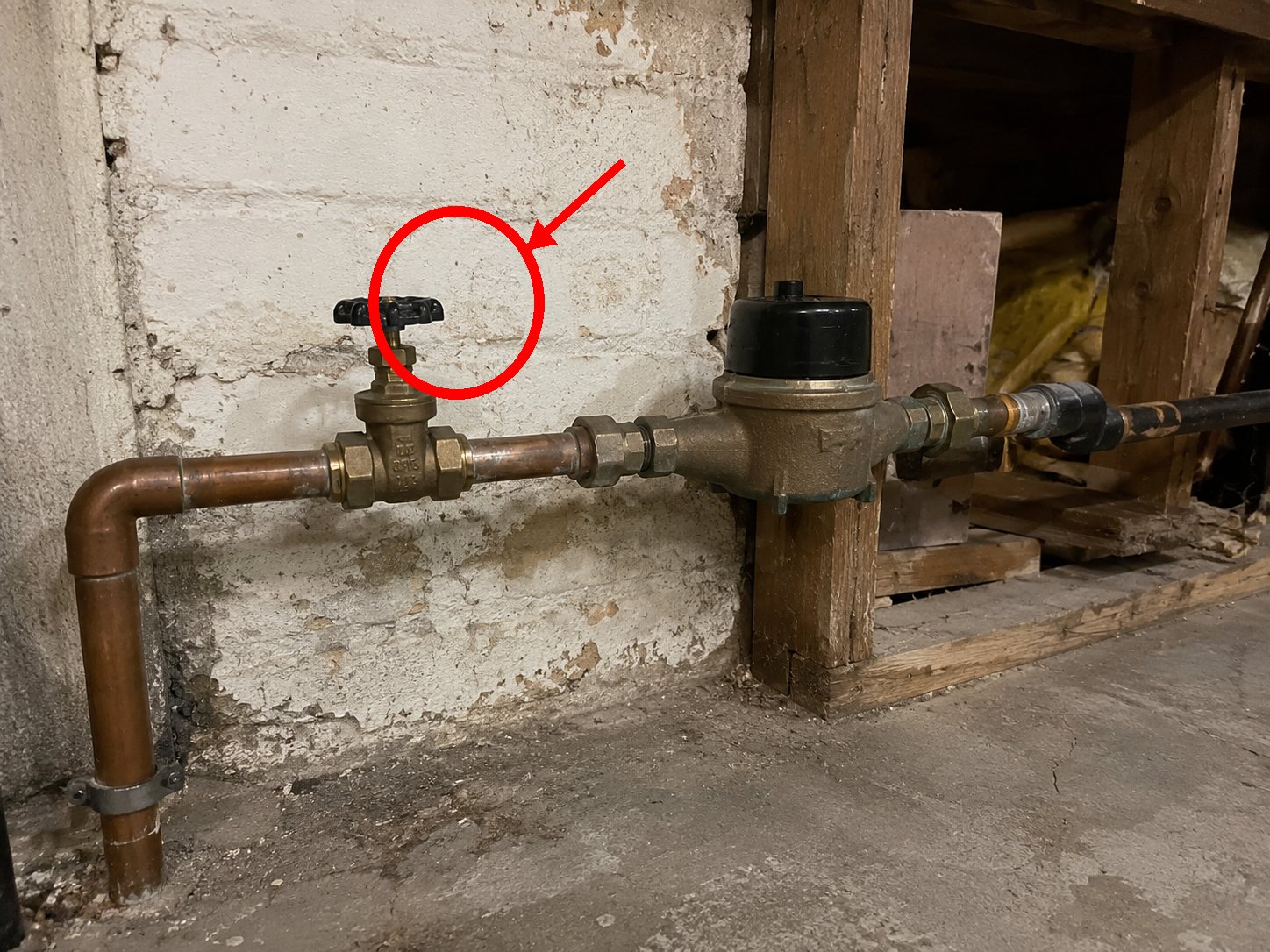
Every home has a main shutoff that stops all water to the house, invaluable during a leak or burst pipe. It's usually where the water line enters the home: often in the basement, a utility area, near the water heater, or close to the street-facing wall. It's typically a valve you turn clockwise (a wheel) or a lever you rotate a quarter turn. Find it now, before you need it, and make sure everyone in the household knows where it is. Minutes matter when water is flowing.
A local word of caution: we have very hard water in our region, which can calcify inside pipes and valves over time. If your main shutoff is old, corroded, or shows signs it has leaked over the years, exercise caution. In older homes especially, the valve body is often corroded internally, so forcing it can make things worse. Sometimes you have to close it a little, open it, close it a little more, and work it gradually before it will fully close, we affectionately call this massaging the valve. If your shutoff looks questionable, it is worth having it inspected or replaced before an emergency forces the issue.
Your electrical panel (breaker box) controls power to the home. To cut power to a specific area, flip that circuit's breaker to OFF. To cut all power, use the main breaker (usually the largest switch at the top). Always keep one hand at your side, stand on a dry surface, and never touch the panel with wet hands or if there's water around it. If the panel itself is wet, sparking, or hot, do not touch it, call an electrician or the utility.
A burning smell from an outlet is a serious warning sign, it can indicate dangerous overheating or arcing that risks fire. Stop using anything on that outlet immediately. If it's safe to do so, shut off power to that circuit at the breaker. Do not keep using the outlet or simply plug into another one nearby, and do not investigate inside the outlet yourself. This is a call-a-licensed-electrician situation, promptly. If you see smoke or flames, leave and call 911.
Act fast to limit damage. First, shut off the water, at the fixture if you can, or the main shutoff for a bigger leak. Then cut power to any affected area at the breaker if water is near outlets or electrical devices. Move belongings out of the water, and start removing standing water and drying the area (fans, towels, a wet-vac) to limit mold. Take photos for insurance. Then call a professional, water damage often extends into places you can't see.
A little prep makes the visit more productive. Stop the water source and make the area safe first. Take photos and note when it started and what you've seen. Clear access to the affected area if you safely can. Note whether the water is clean (a supply line) or dirty (a drain or sewage backup), it affects how the cleanup is handled. Then reach out, and we'll help you figure out the next steps.
A homeowner in Allentown shut off their main water within minutes of a burst supply line, then called us. Because they acted fast and knew where the shutoff was, the damage stayed to one room instead of the whole floor.
GFCI outlets (with TEST and RESET buttons, in kitchens, bathrooms, garages, and outdoors) cut power instantly if they detect a fault, protecting you from shock. Test monthly: press TEST, power should cut off; press RESET, power should return. If TEST doesn't cut the power, the outlet has failed its job and should be replaced. It's a small fix with a big safety payoff.
Some jobs are fine for a handy homeowner, but electrical work carries real risk of shock, fire, and code violations that can void insurance or complicate a future sale. Leave it to a licensed electrician when the job involves the panel or breakers, new circuits or wiring, anything behind walls, aluminum wiring, or any situation involving water near electricity. If you're unsure whether a job is safe to DIY, that uncertainty is itself the answer, get a professional. The cost of an electrician is far less than the cost of getting it wrong.
Call us today
Free project estimates, references, and a clear plan before we begin. (Service calls and repairs may include a dispatch fee.)
